

CPAP vs BiPAP: Understanding the Difference in Sleep Apnea Therapy
For many patients diagnosed with sleep apnea, one of the most common questions is the difference between CPAP vs BiPAP therapy. Both machines are designed to keep your airway open during sleep, helping prevent breathing interruptions that lead to fatigue, loud snoring, and serious health risks.
Sleep apnea occurs when the airway repeatedly collapses during sleep, causing breathing pauses that may last several seconds. Over time, untreated sleep apnea can contribute to high blood pressure, heart disease, daytime fatigue, and reduced cognitive performance. Modern sleep therapy devices such as CPAP and BiPAP machines help address this issue by delivering pressurized air that keeps the airway open throughout the night.
Understanding the difference between CPAP vs BiPAP can help patients choose the most appropriate treatment option together with their sleep specialist.
How CPAP Therapy Works

CPAP stands for Continuous Positive Airway Pressure. As the name suggests, this therapy delivers a steady and consistent level of air pressure throughout the entire breathing cycle.
The purpose of this constant airflow is to prevent the airway from collapsing while sleeping. When a CPAP machine delivers pressurized air through a mask, it acts like an air splint, keeping the throat open so breathing remains stable and uninterrupted.
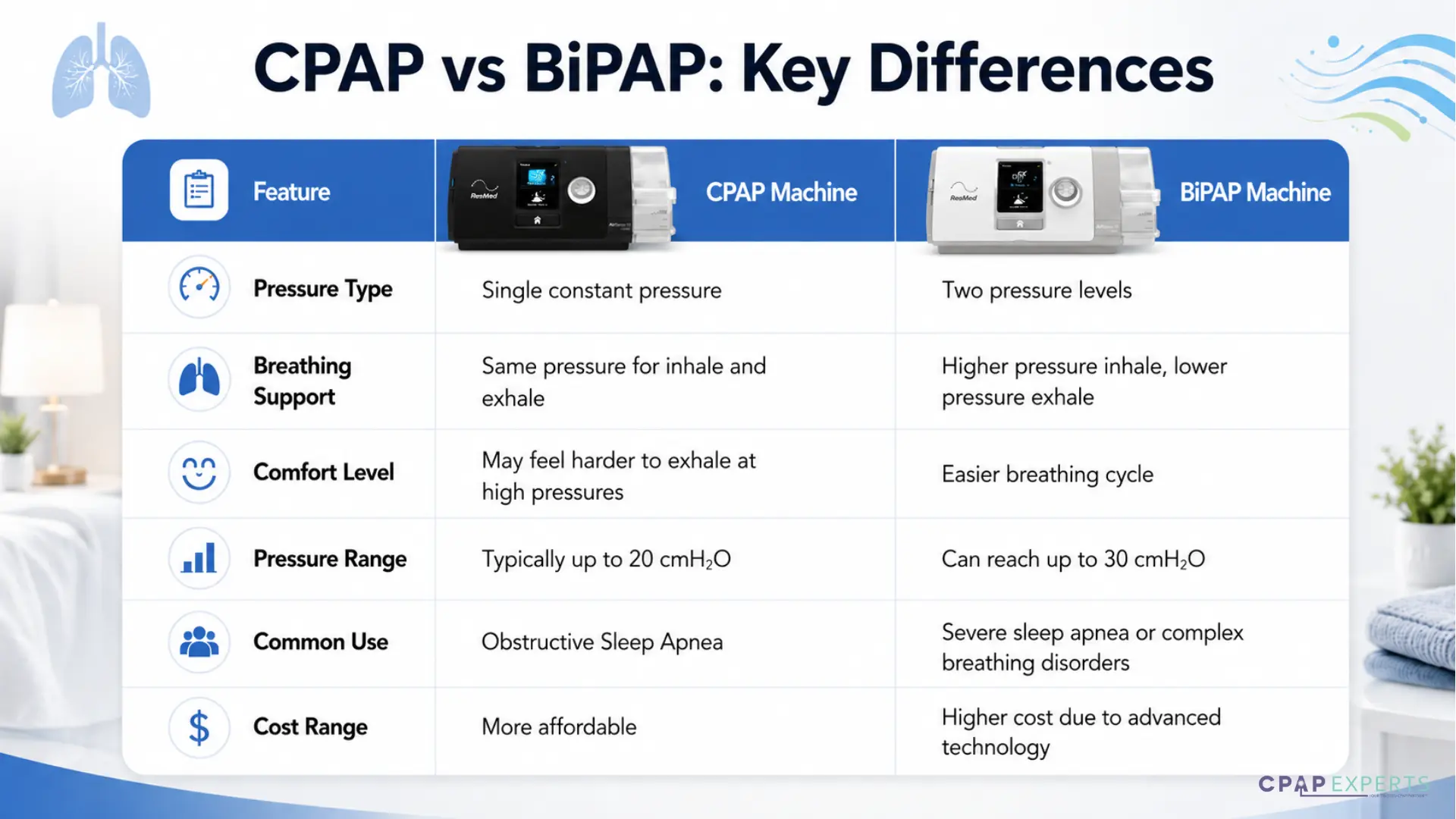
Most CPAP machines operate within a pressure range of 4 to 20 cmH₂O, depending on the severity of the patient’s sleep apnea. A sleep specialist determines the correct pressure level during a sleep study or CPAP titration.
CPAP therapy is often the first-line treatment for obstructive sleep apnea (OSA) because it is highly effective, reliable, and widely available.
At CPAP Experts, patients can explore a wide range of clinically trusted CPAP machines designed to support consistent and comfortable sleep therapy.
Why Some Patients Struggle with CPAP
Although CPAP therapy is highly effective, some patients experience difficulty adjusting to the constant pressure level.
Because the pressure remains the same during inhalation and exhalation, some users feel as if they are breathing against resistance when exhaling. This sensation can become uncomfortable for individuals who require higher pressure settings.
When comfort becomes a barrier to consistent therapy use, sleep specialists may recommend an alternative device such as BiPAP.
How BiPAP Therapy Improves Breathing Comfort
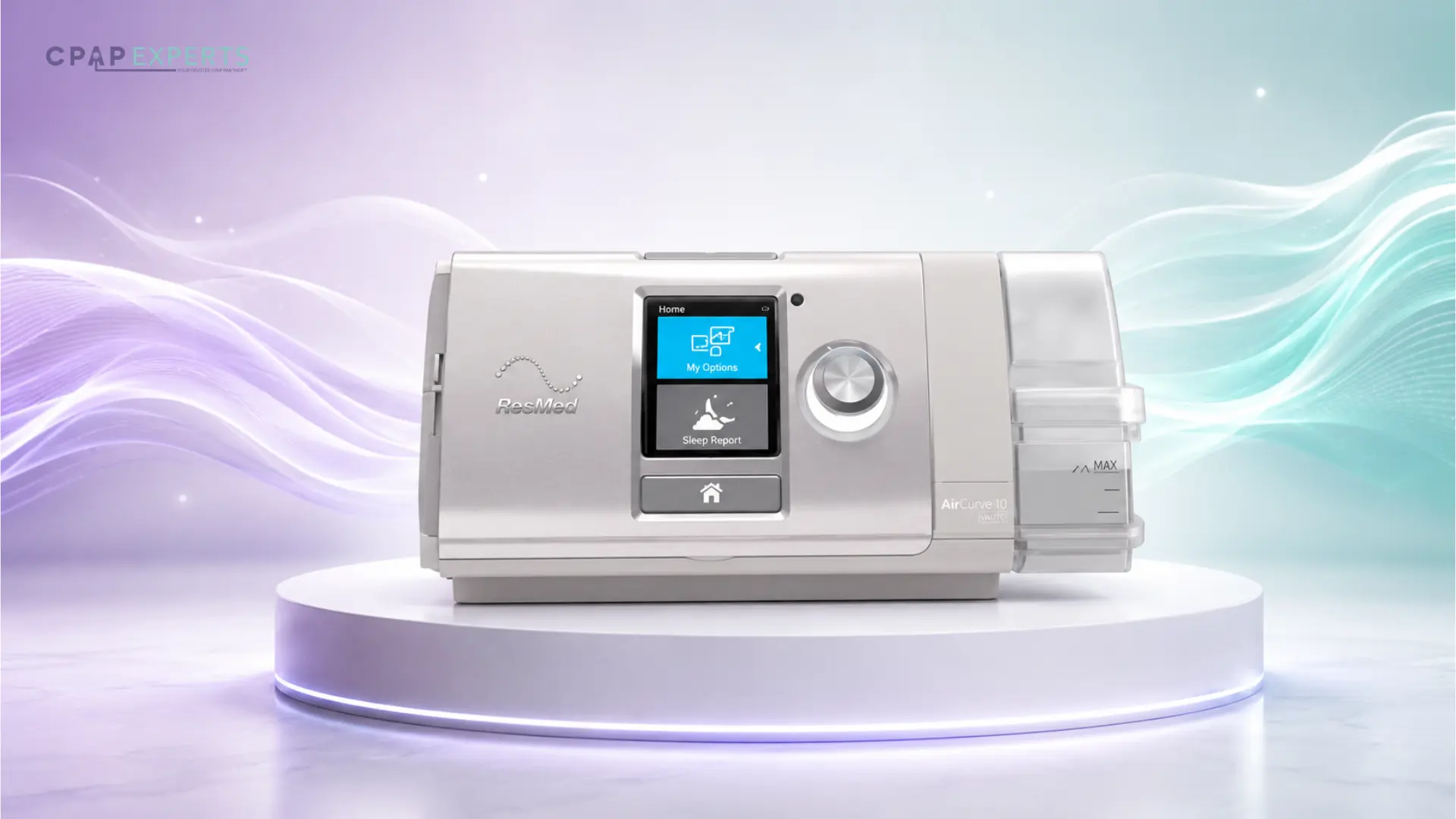
BiPAP stands for Bilevel Positive Airway Pressure, and it differs from CPAP by delivering two distinct pressure levels.
Instead of providing a single constant pressure, a BiPAP machine automatically adjusts between:
- IPAP (Inspiratory Positive Airway Pressure) – higher pressure when inhaling
- EPAP (Expiratory Positive Airway Pressure) – lower pressure when exhaling
This system makes breathing feel more natural and less restrictive, especially for patients who require higher pressure levels to keep their airway open.
Because exhalation pressure is reduced, BiPAP therapy often improves comfort and makes it easier for patients to adapt to treatment.
BiPAP therapy is frequently recommended for patients who:
- Require higher pressure levels
- Have difficulty tolerating CPAP therapy
- Have central sleep apnea
- Have certain respiratory or neuromuscular condition
Both machines can generally use the same CPAP masks, tubing, and humidifiers, making it easier for patients to transition between devices if their therapy changes.
Cost Differences Between CPAP and BiPAP
Another important factor in the CPAP vs BiPAP comparison is cost.
CPAP machines are typically more affordable and widely prescribed as the first step in sleep apnea therapy. In contrast, BiPAP machines contain more advanced technology and therefore tend to cost more.
Estimated price ranges:
- CPAP machines: approximately $500 to $1,000
- BiPAP machines: approximately $1,700 to $3,000+
Because of the price difference, many insurance providers require patients to try CPAP therapy first before approving BiPAP coverage.
If CPAP therapy proves ineffective or uncomfortable, a sleep specialist can recommend upgrading to BiPAP therapy.
Choosing the Right Machine for Your Sleep Apnea
When comparing CPAP vs BiPAP, it is important to understand that neither machine is universally better. The right choice depends on several factors, including:
- Severity of sleep apnea
- Comfort with pressure levels
- Breathing patterns during sleep
- Medical history and respiratory conditions
For many patients, CPAP therapy provides excellent results and remains the most common treatment option. However, for individuals who struggle with higher pressure or complex breathing conditions, BiPAP may provide better comfort and therapeutic outcomes.
At CPAP Experts, our team helps patients identify the most suitable therapy device, mask type, and pressure settings to ensure long-term success with sleep apnea treatment.
The Importance of Consistent Sleep Therapy
Regardless of whether a patient uses CPAP or BiPAP, consistent nightly use is the key to effective treatment. Sleep apnea therapy only works when the device is used regularly and fitted properly.
Choosing the right mask, adjusting the fit, and working closely with sleep professionals can significantly improve therapy comfort and long-term health outcomes.
By understanding the differences between CPAP vs BiPAP, patients can make informed decisions and take the first step toward better sleep, improved energy, and long-term cardiovascular health.
Contact us:
We are a group of Sleep Experts who specialize in non-invasive ventilation treatments such as CPAP, APAP, BiPaP and AVAPS. We established this company to bring the latest technology in Sleep and Respiratory Care to the people in the Philippines
Address
Clinic: 17i Avenir condominium, Archbishop Reyes St., Lahug, Cebu City
Mindanao Clinic: Davao, Iloilo, Cagayan De Oro
Metro Manila Clinic: Las Piñas & Makati
Contact Numbers
Smart: 0969-567-3348
Globe: 0915-523-8154
Landline: (032) 2730553
Mail
info@cpapexperts.ph